
Electronics Component Manufacturing Recruitment in Greater Noida: Hiring Skilled Talent for a Growing Electronics Industry
Electronic products are part of almost every aspect of modern life. Smartphones, computers, televisions, vehicles and industrial machines all depend on electronic components. Behind these products are factories that manufacture printed circuit boards, assemble components, test electronic systems and prepare finished products for the market.
These factories need people with different technical skills. This makes electronics component manufacturing recruitment in Greater Noida an important requirement for electronics manufacturers, component suppliers and electronic manufacturing services companies.
Greater Noida has an established electronics manufacturing base. It also benefits from its connection with the wider Noida and Yamuna Expressway industrial region. As new projects develop around Jewar, the demand for skilled employees across the electronics supply chain may create further recruitment opportunities.
However, electronics manufacturing is not limited to assembling mobile phones. It includes printed circuit board assembly, component fitting, soldering, testing, quality inspection, machine maintenance and production planning.
Each activity requires a different type of employee.
For example, an SMT machine operator must understand an automated assembly line, while a quality inspector must know how to identify defects in electronic components. Similarly, a maintenance engineer may be responsible for keeping production machines and testing equipment working properly.
Therefore, companies need a planned recruitment process that matches candidates with the right machines, products and production activities.
This article explains the electronics manufacturing ecosystem around Greater Noida, the most important job roles, common hiring challenges and how businesses can build a reliable workforce.
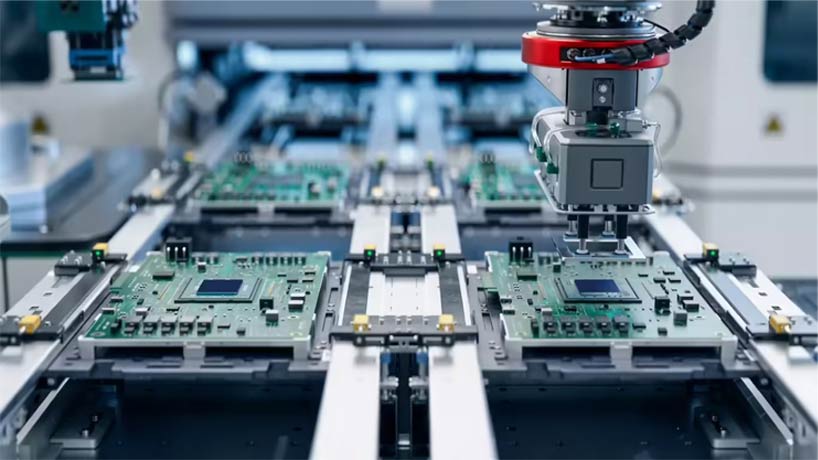
Why Electronics Component Manufacturing Recruitment in Greater Noida Matters
Greater Noida is an important part of Uttar Pradesh’s electronics manufacturing ecosystem.
The state has developed industrial areas and electronics clusters to attract mobile-phone manufacturers, consumer electronics companies, component makers and electronic manufacturing services providers.
The Government of Uttar Pradesh identifies Greater Noida’s Ecotech industrial areas and the Yamuna Expressway region as important locations for electronics manufacturing.
Existing facilities in the wider area are associated with major electronics and mobile manufacturing companies. This provides a base for component suppliers, assembly partners and supporting businesses.
The region is also moving towards more specialised component manufacturing.
In June 2026, the Government of India announced two major electronics manufacturing projects at Yamuna City, Jewar, involving approximately ₹6,750 crore in investment. The announcement included advanced multi-layer printed circuit board manufacturing and a new 206-acre Electronics Manufacturing Cluster in Sector 10 of the YEIDA region.
These developments are important because they can strengthen the local electronics supply chain.
For employers, this creates potential hiring requirements across:
- Electronics component manufacturing
- PCB manufacturing and assembly
- SMT production
- Mobile-phone component assembly
- Electronic module manufacturing
- Quality inspection and testing
- Automation and machine maintenance
- Packaging and warehouse operations
- Production planning and supply chain management
However, project announcements should not be confused with current vacancies. Companies must confirm their actual hiring plans, production schedules and location requirements before starting recruitment.
Understanding the Electronics Manufacturing Ecosystem Around Greater Noida
Electronics manufacturing includes several activities. Some factories produce individual components, while others assemble components into complete electronic products.
The wider Greater Noida and Yamuna Expressway region offers opportunities across these connected activities.
1. Electronics System Design and Manufacturing
Electronics System Design and Manufacturing, commonly known as ESDM, covers the design, development and production of electronic systems and products.
This sector includes mobile phones, consumer electronics, telecom equipment, industrial electronics and related components.
Common manufacturing activities include:
- Electronic circuit design
- Component sourcing
- PCB production
- PCB assembly
- Electronic module assembly
- Product testing
- Final product assembly
Each stage needs a different combination of technical employees.
2. Printed Circuit Board Manufacturing
A Printed Circuit Board (PCB) is a board that connects electronic components through conductive paths.
PCBs are used in smartphones, computers, televisions, automotive electronics, industrial controls and many other products.
Manufacturing and assembling a PCB involves several activities, including board preparation, component placement, soldering, inspection and testing.
Common recruitment requirements include:
- PCB Production Engineer
- PCB Assembly Technician
- Soldering Operator
- Production Supervisor
- Quality Inspector
- Testing Technician
- Process Engineer
For specialised roles, employers should check the candidate’s actual experience with the type of PCB and manufacturing process used at the facility.
3. Surface Mount Technology (SMT) Manufacturing
Surface Mount Technology, or SMT, is a process used to place small electronic components directly onto a printed circuit board.
It is widely used in modern electronics manufacturing because it supports accurate and high-volume production.
An SMT line may include:
- Solder paste printing
- Component placement
- Reflow soldering
- Automated inspection
- Testing and repair
These stages require trained operators and technicians.
Common job profiles include:
- SMT Machine Operator
- Pick-and-Place Operator
- Solder Paste Printing Operator
- Reflow Oven Operator
- SMT Line Supervisor
- SMT Maintenance Technician
- SMT Quality Inspector
Candidates should understand the actual machines and production steps used by the company.
4. Electronic Component and Module Assembly
Electronic products contain several smaller parts and modules.
These can include camera modules, display modules, connectors, passive components, cables, power supplies and other electronic assemblies.
The Uttar Pradesh Electronics Component Manufacturing Policy 2025 identifies several such areas as focus segments, including display modules, camera modules, multi-layer PCBs, selected passive components and electronic enclosures.
This creates opportunities for businesses involved in component manufacturing and sub-assembly.
Potential job roles include assembly operators, production technicians, line leaders, quality inspectors, process engineers and maintenance professionals.
5. Semiconductor-Related Manufacturing
Semiconductor manufacturing is another area developing around the wider Yamuna Expressway region.
In February 2026, the foundation stone was laid for the HCL-Foxconn joint venture’s semiconductor assembly and test project, India Chip Private Limited, in the YEIDA region near Jewar.
This project is focused on Outsourced Semiconductor Assembly and Test (OSAT). OSAT refers to activities such as packaging and testing semiconductor chips after wafer fabrication.
It is a specialised part of the electronics supply chain. It should not be confused with ordinary PCB assembly or mobile-phone final assembly.
Potential workforce requirements may include:
- Semiconductor Process Technicians
- Cleanroom Technicians
- Equipment Maintenance Engineers
- Quality Engineers
- Testing Technicians
- Process Engineers
- Production Supervisors
These positions may need specialised training and experience.
Consequently, employers should use separate job descriptions for semiconductor operations rather than relying on general electronics assembly profiles.
Major Job Roles Required by Electronics Manufacturing Companies in Greater Noida
Electronics manufacturing companies need employees across production, engineering, quality, testing, maintenance and supply chain functions.
The following table provides an overview of common recruitment requirements.
| Department | Common positions | Important skills |
|---|---|---|
| Production | Production Engineer, Shift Supervisor | Production planning, line management |
| SMT | SMT Operator, Pick-and-Place Operator | Machine operation, component placement |
| PCB Assembly | PCB Technician, Soldering Operator | PCB handling, soldering, inspection |
| Component Assembly | Assembly Operator, Line Leader | Component fitting, assembly procedures |
| Quality | Quality Engineer, QC Inspector | Defect checking, inspection and reporting |
| Testing | Testing Technician, Test Engineer | Functional testing, fault identification |
| Maintenance | Maintenance Engineer, Technician | Machine maintenance, troubleshooting |
| Electrical | Electrical Engineer, Electrician | Electrical systems and control panels |
| Automation | PLC Technician, Automation Engineer | Sensors, machine controls and automation |
| Process Engineering | Process Engineer, Industrial Engineer | Process improvement, cycle time |
| Warehouse | Store Executive, Inventory Controller | Material tracking and stock control |
| Procurement | Purchase Executive, Supplier Coordinator | Component sourcing and vendor management |
| Packaging | Packaging Operator, Packing Supervisor | Packaging, labelling and final checks |
| Management | Plant Manager, Production Manager | Overall production and workforce planning |
The exact workforce will depend on the product, factory size, production volume and level of automation.
SMT Operator and PCB Technician Recruitment: What Employers Should Check
SMT and PCB assembly are important areas of electronics manufacturing. However, employers should not assume that every electronics operator has the same machine experience.
1. SMT Machine Operators
SMT operators work with automated equipment used to place components on printed circuit boards.
Their work may include:
- Loading components and reels
- Preparing machines
- Monitoring component placement
- Checking production alerts
- Supporting line changeovers
- Reporting machine problems
Employers should check whether candidates have handled pick-and-place machines, solder paste printers or reflow ovens.
2. PCB Assembly Technicians
PCB assembly technicians work with electronic components and printed circuit boards.
Depending on the process, they may perform manual component placement, soldering, inspection and repair.
The Electronics Sector Skills Council of India recognises PCB Assembly Technician as a formal job role. It also lists Pick and Place Assembly Operator and Electronics Manufacturing Services Technician as separate qualifications.
These occupational roles can help employers prepare better job descriptions and identify relevant training requirements.
3. Soldering Operators
Soldering operators join electronic components to circuit boards using suitable soldering methods.
Candidates should understand soldering tools, component handling, visual inspection and basic defect identification.
For more specialised work, employers may require experience with surface-mount or through-hole soldering.
4. SMT Line Supervisors
SMT supervisors manage the production line and coordinate operators, technicians and quality employees.
Their responsibilities may include:
- Monitoring production targets
- Allocating operators
- Managing machine changeovers
- Checking production records
- Coordinating quality inspections
- Reporting machine downtime
Employers should look for candidates who understand both machine operations and team management.
Quality Control and Testing Recruitment in Electronics Manufacturing
Electronic products require careful inspection and testing.
A small defect in a circuit board or electronic component can affect the performance of the final product.
Therefore, quality and testing employees play an important role in electronics manufacturing.
Quality Control Engineers
Quality engineers help monitor product quality and manufacturing processes.
Their work may include:
- Checking incoming components
- Monitoring production quality
- Reviewing defects
- Supporting corrective actions
- Maintaining inspection records
- Coordinating with production teams
PCB Quality Inspectors
PCB inspectors check boards for visible defects and assembly problems.
Depending on the facility, they may inspect solder joints, component placement, board condition and other quality requirements.
Testing Technicians
Testing technicians check whether an electronic product or module functions as expected.
Their work may include:
- Electrical testing
- Functional testing
- Visual inspection
- Fault identification
- Test record preparation
Automated Optical Inspection Operators
Automated Optical Inspection (AOI) is a system that uses cameras and software to identify visible defects in electronic assemblies.
AOI operators monitor the inspection system and review reported defects.
Employers should check whether candidates have actual experience with AOI equipment or have worked in a similar inspection process.
Why technical quality experience matters
A candidate with general factory inspection experience may not be suitable for a specialised PCB quality position.
As a result, employers should ask about the products inspected, machines used, defects identified and inspection methods followed.
Engineering and Maintenance Recruitment in Electronics Factories
Electronics manufacturing plants depend on specialised production machines and testing equipment.
A machine breakdown can interrupt the production line and affect delivery schedules.
Therefore, maintenance employees are an important part of the workforce.
1. Mechanical Maintenance Engineers
Mechanical employees may maintain machine parts, conveyors, production equipment and other mechanical systems.
Common vacancies include Mechanical Maintenance Engineer, Maintenance Supervisor and Mechanical Technician.
2. Electrical Maintenance Engineers
Electrical teams may work on motors, panels, sensors, power systems and machine controls.
Relevant positions include Electrical Engineer, Electrician and Electrical Maintenance Technician.
3. Automation Engineers and Technicians
Modern electronics plants use automated production and inspection systems.
Automation employees may work with PLCs, sensors, controllers, machine interfaces and control systems.
Their work helps keep machines running and reduces repeated production problems.
4. Process Engineers
Process engineers focus on improving how products are manufactured.
Their work may involve:
- Reviewing production steps
- Reducing repeated defects
- Improving machine settings
- Monitoring production time
- Supporting new product introduction
- Coordinating with quality teams
These positions often require relevant manufacturing experience and good problem-solving skills.
Skills and Qualifications Required for Electronics Manufacturing Jobs
The correct qualification depends on the job.
Not every electronics factory employee needs an engineering degree. However, technical and supervisory positions usually require suitable education and work experience.
Entry-level production roles
Employers may consider candidates with suitable school education, ITI or vocational training, depending on the job.
They should also assess basic reading ability, attention to detail, discipline and willingness to learn.
Technician-level roles
Diploma holders and candidates with relevant ITI or technical training may be suitable for selected positions.
For SMT, soldering and PCB assembly roles, practical exposure to the actual production process is important.
Engineering roles
For engineering vacancies, employers may consider qualifications such as:
- B.Tech or B.E. Electronics Engineering
- B.Tech or B.E. Electrical Engineering
- B.Tech or B.E. Electrical and Electronics Engineering
- B.Tech or B.E. Mechanical Engineering
- Diploma in Electronics Engineering
- Diploma in Electrical Engineering
- Diploma in Mechanical Engineering
The right qualification depends on the responsibilities of the position.
Quality and testing roles
Employers may consider candidates with electronics, electrical or instrumentation backgrounds.
For some laboratory and inspection roles, practical testing experience can be more important than the degree title alone.
Training and skill standards
The Electronics Sector Skills Council of India provides recognised occupational qualifications for electronics manufacturing.
These include Assembly Line Operator, Pick and Place Assembly Operator, PCB Assembly Technician and Electronics Manufacturing Services Technician.
Employers can use these standards as a reference when defining entry-level responsibilities and training needs.
However, a skills qualification does not replace the practical assessment required for a specific factory and machine.
Common Recruitment Challenges Faced by Electronics Manufacturers in Greater Noida
The electronics industry requires a mix of technical knowledge and practical machine experience.
Consequently, companies may face difficulties when trying to fill specialised vacancies.
1. Shortage of experienced SMT operators
SMT lines use specialised machines and production processes.
Candidates with general assembly experience may not have worked on automated pick-and-place equipment.
Employers should clearly specify the machine type and experience required.
2. Difficulty finding PCB assembly technicians
PCB assembly needs careful component placement, soldering and inspection.
For certain jobs, candidates must be able to work with small components and follow detailed instructions.
Attention to detail is particularly important.
3. Competition for experienced quality engineers
Electronics quality professionals are needed across mobile manufacturing, automotive electronics, consumer products and industrial equipment.
Companies may compete for candidates who understand testing, defect analysis and production quality systems.
4. Limited machine maintenance experience
Specialised production machines need trained technicians.
Employers may find candidates with general maintenance backgrounds but limited knowledge of SMT equipment, soldering systems or automated inspection machines.
5. Changing production requirements
Electronics factories may handle different products and models.
As a result, production lines can require new machine settings, operator training and quality checks.
Recruitment teams should understand whether the vacancy is for regular production or a new product line.
6. Managing large workforces and multiple shifts
Large electronics plants may operate several production lines and shifts.
They need reliable employees who can follow instructions, maintain attendance and work within the factory’s production system.
Clear shift communication and a suitable transport plan can help reduce joining and retention problems.
7. Employee training and retention
Electronics manufacturing requires employees to learn specific machine procedures and quality requirements.
If trained employees leave frequently, the company may need to repeat the same training.
Therefore, employers should invest in employee induction, technical development and suitable working conditions.
How to Build an Effective Electronics Manufacturing Recruitment Strategy
A structured recruitment process can help electronics companies find suitable candidates and reduce hiring delays.
Step 1: Identify the exact manufacturing process
Start by identifying the activity for which employees are required.
Is the company involved in PCB assembly, SMT, component manufacturing, module assembly, testing or final product assembly?
Each process needs different skills.
Step 2: Prepare clear job descriptions
Every vacancy should mention:
- Job title and department
- Exact factory location
- Product or component handled
- Machine or process involved
- Educational qualification
- Required experience
- Shift arrangements
- Salary range and benefits
- Reporting manager
- Main responsibilities
Clear job descriptions help recruiters identify suitable candidates.
Step 3: Screen candidates for machine experience
Do not rely only on job titles.
For example, an SMT operator should be asked about the equipment handled, line responsibilities and production experience.
Similarly, a PCB technician should be assessed on soldering, component handling and inspection work.
Step 4: Conduct technical interviews
Department managers should take part in interviews for specialised positions.
Useful questions may cover machine operation, production defects, component handling, quality checks and routine maintenance.
The questions should match the candidate’s experience level.
Step 5: Conduct practical assessments
Where suitable, companies can use practical tests to check an employee’s abilities.
These may include:
- Soldering exercises
- PCB visual inspection
- Component identification
- Machine operation discussions
- Testing and fault-finding exercises
- Basic quality inspection
All practical assessments should be conducted safely and with suitable supervision.
Step 6: Verify qualifications and experience
Employers should check education, previous employment, relevant training and actual work responsibilities.
For specialised positions, a reference check can also help confirm the candidate’s experience.
Step 7: Plan joining and technical training
New employees should understand the production process, workplace safety rules, quality requirements and reporting procedures.
A 30-60-90-day review can help managers check technical performance and identify further training needs.
How EliteHire Supports Electronics Manufacturing Recruitment in Greater Noida
EliteHire Placement Solutions provides recruitment, manpower placement and HR support for businesses across several industries.
For electronics manufacturers in Greater Noida and the wider Yamuna Expressway region, hiring requirements may range from a few technical professionals to larger production and assembly teams.
The recruitment approach can be planned around the employer’s actual manufacturing process and workforce requirements.
1. Technical and engineering recruitment
Electronics companies may need production engineers, quality engineers, electrical engineers, mechanical engineers, maintenance technicians and process supervisors.
EliteHire can work with employers to define the qualifications, experience and technical responsibilities required for each vacancy.
2. Skilled and semi-skilled manpower
Electronics factories may need assembly operators, production employees, packaging staff, machine operators and material handlers.
Through its Manpower Recruitment services, EliteHire supports businesses with manpower hiring and placement requirements.
3. Recruitment coordination
When companies have multiple vacancies across production, quality and engineering, managing candidate sourcing and interview coordination can take time.
EliteHire’s Placement Consultant services provide a starting point for discussing recruitment support.
4. HR and workforce management
Electronics manufacturers also need organised HR processes for employee documentation, workforce planning, attendance and performance management.
EliteHire’s HR Consultant services can support businesses with HR-related requirements.
5. Employee training and development
Some employees may have basic technical knowledge but need additional training on specific machines or production processes.
Through Corporate Training Services, businesses can explore employee training and development support.
For broader recruitment and HR assistance, companies can also contact EliteHire Placement Solutions.
The employer remains responsible for final technical selection, machine-specific assessment, safety training and any required factory authorisations.
Why Electronics Companies Should Plan Recruitment Before Expanding Production
Recruitment should be included in production planning rather than treated as a last-minute activity.
Consider an electronics manufacturer preparing to add another assembly line.
The company may need SMT operators, PCB technicians, quality inspectors, maintenance technicians, line supervisors and production engineers.
If recruitment begins only after the new line is ready, the business may face delays.
A planned recruitment process can help the company:
- Identify important technical vacancies early.
- Recruit experienced line supervisors first.
- Find machine operators according to the equipment installed.
- Arrange technical interviews with department managers.
- Prepare joining and shift arrangements.
- Train employees on production and quality procedures.
- Build a maintenance team before full production begins.
As a result, the company can prepare its employees alongside its production equipment.
Illustrative Case Study: Building a Skilled Workforce for an Electronics Assembly Unit
The following is a hypothetical example created to explain a recruitment process. It is not a real EliteHire client assignment, placement record or verified business result.
Imagine an electronics manufacturing company preparing to expand its PCB assembly operations in the Greater Noida region.
The management identifies vacancies across SMT, production, quality inspection, maintenance and packaging.
Initially, the HR team receives applications from candidates with different types of factory experience. However, many applicants have not worked with SMT machines or electronic components.
The company decides to divide the recruitment process into four stages.
Stage 1: Manpower planning
The production manager identifies the number of operators, technicians, supervisors and quality employees required for each line.
Stage 2: Technical candidate screening
SMT candidates are screened for machine experience. PCB technicians are assessed on assembly and soldering skills. Quality employees are checked for inspection and testing knowledge.
Stage 3: Interviews and verification
Department managers conduct technical discussions. HR verifies qualifications, employment history and joining availability.
Stage 4: Induction and training
Selected employees receive training on the production line, machine procedures, quality requirements and safety rules. Managers also establish early performance reviews.
The key lesson is that electronics recruitment becomes more effective when the hiring process is linked to the machines, components and production stages used by the company.
Recruitment Checklist for Electronics Manufacturers in Greater Noida
Before starting a recruitment drive, employers can use the following checklist.
-
Identify the exact manufacturing process.
-
Confirm the factory and industrial-area location.
-
Prepare department-wise manpower requirements.
-
Define the machines and equipment involved.
-
Specify education and technical experience.
-
Identify required SMT, PCB or assembly knowledge.
-
Define quality and testing responsibilities.
-
Confirm salary, shift and transport arrangements.
-
Establish technical interviews and practical assessments.
-
Verify candidate qualifications and work history.
-
Prepare employee induction and safety training.
-
Plan early performance reviews.
A clear checklist helps production, engineering, quality and HR teams work towards the same hiring goals.
The Future of Electronics Component Manufacturing Recruitment in Greater Noida
Electronics manufacturing is changing as more companies focus on local component production, automation and advanced testing.
This will influence the type of employees required in the coming years.
1. Growth in PCB manufacturing
Multi-layer PCBs are used in more advanced electronic products.
Their production and assembly require trained employees in manufacturing, testing, quality and process control.
2. Mobile and camera module assembly
The Uttar Pradesh Electronics Component Manufacturing Policy identifies display and camera module sub-assemblies as focus areas.
This creates opportunities for assembly operators, quality inspectors, process technicians and production supervisors.
3. Semiconductor-related skills
As semiconductor projects develop in the wider YEIDA region, employers may need more people with knowledge of cleanroom operations, chip packaging, testing and specialised equipment.
These jobs will require training that is different from ordinary electronics assembly.
4. Automation and machine maintenance
Electronics plants use more automated equipment to improve accuracy and production speed.
Consequently, companies will need technicians who understand machine controls, automation and preventive maintenance.
5. Quality testing and inspection
Electronic components need proper testing before they are used in finished products.
Quality professionals and testing technicians will remain important for product performance and reliability.
6. Technical skill development
The electronics industry needs employees who can understand new machines and manufacturing processes.
Companies that invest in technical training can develop a stronger workforce and reduce the gap between basic education and factory requirements.
Conclusion: Building a Skilled Workforce for Greater Noida’s Electronics Industry
Greater Noida has an established position in Uttar Pradesh’s electronics manufacturing ecosystem. Its connection with the wider Yamuna Expressway and Jewar region is also creating opportunities across PCB manufacturing, electronic components, assembly and semiconductor-related projects.
However, successful electronics component manufacturing recruitment in Greater Noida requires more than hiring general factory employees.
Companies need people who understand electronic components, assembly processes, production machines, testing methods and quality requirements.
A planned recruitment process can help employers find suitable candidates, prepare new production lines and build reliable teams.
EliteHire Placement Solutions works with businesses on manpower recruitment, placement and HR support. Companies looking for SMT operators, PCB technicians, electronics engineers, quality inspectors, maintenance technicians or skilled production manpower can connect with the team to discuss their hiring requirements.
Planning to hire for an electronics component manufacturing or assembly facility in Greater Noida?
Visit EliteHire Placement Solutions and share your workforce requirements.
Frequently Asked Questions
1. Why is Greater Noida important for electronics manufacturing recruitment?
Greater Noida has established electronics manufacturing activity and is connected to the wider Yamuna Expressway industrial region. New electronics component and semiconductor-related projects in the area are also strengthening the regional manufacturing ecosystem.
2. Which employees are commonly required in electronics manufacturing companies?
Common vacancies include SMT operators, PCB assembly technicians, production engineers, quality inspectors, testing technicians, maintenance engineers, electrical technicians, assembly supervisors and warehouse employees.
3. What is an SMT operator?
An SMT operator works with automated equipment that places small electronic components on printed circuit boards. Depending on the job, the employee may work with solder paste printers, pick-and-place machines or reflow ovens.
4. What is a PCB assembly technician?
A PCB assembly technician works with electronic components and printed circuit boards. The work may include component placement, soldering, inspection and basic assembly checks.
5. What qualifications are useful for electronics manufacturing jobs?
Employers may consider ITI, diploma and engineering qualifications in electronics, electrical, mechanical or related fields, depending on the position. Practical experience with the relevant machines is also important.
6. What is the difference between electronics assembly and semiconductor manufacturing?
Electronics assembly involves fitting components onto boards or assembling electronic modules and finished products. Semiconductor manufacturing involves specialised processes used to produce, package or test semiconductor chips. The required skills and working conditions can be different.
7. Why is quality control important in electronics manufacturing?
Quality control helps identify faulty components, poor soldering, incorrect placement and other manufacturing defects. It supports better product performance and reduces the risk of defective products reaching customers.
8. Does EliteHire provide electronics manufacturing manpower recruitment in Greater Noida?
EliteHire provides manpower recruitment and placement support for businesses across industries. Electronics manufacturers can share their technical requirements, job descriptions and workforce needs to discuss suitable recruitment support.
9. How can electronics companies reduce employee turnover?
Companies can improve retention through clear job expectations, suitable shift arrangements, fair compensation, safe working conditions, technical training and supportive supervisors.
#ElectronicsRecruitment #GreaterNoida #ElectronicsManufacturing #PCBAssembly #SMTOperator #PCBTechnician #ElectronicsJobs #SemiconductorIndustry #ElectronicsComponents #ProductionEngineer #QualityControl #UttarPradeshIndustry #ManufacturingRecruitment #EliteHirePlacementSolutions