
#MiningRecruitment #MiningIndustry #Udaipur #RajasthanMining #MineralProcessing #MiningManpower #MiningEngineers #GeologyJobs #MiningJobs #RockPhosphate #LeadZincMining #IndustrialRecruitment #ManpowerConsultancy #EliteHirePlacementSolutions
Mining Recruitment in Udaipur: Finding Skilled Professionals for Rajasthan’s Mining and Mineral Processing Industry
Mining is one of the important foundations of Rajasthan’s industrial economy. From underground metal extraction to rock-phosphate beneficiation and stone processing, the sector depends on people who understand geology, heavy machinery, plant operations, engineering, quality control and workplace safety. As a result, mining recruitment in Udaipur is an important requirement for mining companies, mineral-processing businesses, contractors and industrial employers operating across southern Rajasthan.
Udaipur has a distinctive position in this sector. The district has established mineral belts associated with lead, zinc and silver, along with rock phosphate, marble, copper, soapstone and other industrial minerals. Two well-known examples illustrate the diversity of the local industry: the underground lead-zinc operations at Zawar and the rock-phosphate mining and beneficiation activities at Jhamarkotra.
These operations need different types of employees. Underground mines require people familiar with mine development, equipment, ventilation, survey work and underground safety. Mineral-processing facilities need plant operators, mechanical and electrical technicians, laboratory personnel, production supervisors and maintenance engineers. Quarrying and stone-processing businesses, meanwhile, require machine operators, fitters, quality inspectors and dispatch teams.
Consequently, mining recruitment is not simply about finding general factory workers. Employers need candidates whose technical knowledge matches the mineral, mining method, machinery and processing requirements of the operation.
This article explains Udaipur’s mining ecosystem, the major job profiles required, common recruitment challenges and how businesses can develop a more reliable workforce.
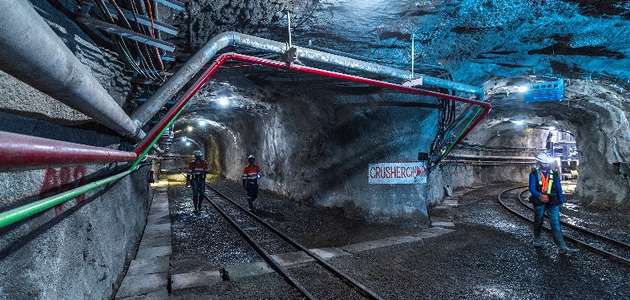
Why Mining Recruitment in Udaipur Matters
Rajasthan has a substantial mineral resource base and a long-established mining industry.
The Government of Rajasthan’s mines and minerals investment portal states that the state produces 22 major minerals and 36 minor minerals. It also identifies lead, zinc, wollastonite and selenite among minerals for which Rajasthan is the country’s sole producer under the Rajasthan Mineral Policy 2024. The state has established strengths in lead-zinc, silver, copper, phosphorite or rock phosphate, marble, limestone, sandstone and granite.
The Udaipur district’s mineral profile adds a more local perspective. Its official District Survey Report identifies deposits and mineral occurrences that include:
- Lead, zinc and silver
- Rock phosphate
- Copper
- Marble and granite
- Soapstone and pyrophyllite
- Limestone
- Fluorite
- Barite
- Masonry stone
- Other industrial minerals
This variety creates workforce requirements across extraction, material handling, beneficiation, processing, maintenance, quality testing and transportation.
For employers, the opportunity is accompanied by a recruitment challenge. A mining engineer, underground equipment operator and mineral-processing technician do not perform interchangeable jobs. Each role requires a different combination of knowledge, experience and safety competence.
Therefore, companies should define their workforce requirements according to the actual operation rather than use one broad mining job description for every vacancy.
Understanding Udaipur’s Mining and Mineral Processing Ecosystem
Udaipur’s mining sector includes different mineral belts and processing activities. Understanding the local operations helps employers identify the technical profiles they need.
1. Zawar: Lead-Zinc Underground Mining
Zawar is one of the most prominent mining locations associated with Udaipur.
Hindustan Zinc describes Zawar Mines as an underground mining complex covering four deposits: Mochia, Balaria, Zawarmala and Baroi. Its official operations page lists zinc concentrate and lead concentrate among the materials produced.
The company’s description also highlights processes such as underground ore handling, crushing, hoisting, milling and flotation. These activities create a broad requirement for mining, mechanical, electrical, instrumentation and processing professionals.
Potential recruitment requirements include:
- Mining Engineers
- Mine Supervisors
- Geologists
- Mine Surveyors
- Drilling and production personnel
- Underground equipment operators
- Mechanical Maintenance Engineers
- Electrical Technicians
- Ventilation and dewatering personnel
- Mineral Processing Engineers
- Plant Operators
- Safety Professionals
Underground mining experience is particularly relevant for technical roles where employees must understand the working environment, equipment and operating procedures.
2. Jhamarkotra: Rock Phosphate Mining and Beneficiation
Jhamarkotra is another important industrial reference point in the Udaipur district.
The Rajasthan Department of Mines and Geology’s District Survey Report identifies the Jhamarkotra phosphorite deposit approximately 24 km southeast of Udaipur.
Rajasthan State Mines and Minerals Limited (RSMML) describes its rock-phosphate activities as including mining and beneficiation of low-grade rock phosphate to produce a higher-grade concentrate. This means that workforce requirements extend beyond mineral extraction into plant operations and process control.
Typical job profiles include:
- Mining Engineers
- Production Supervisors
- Excavator and Loader Operators
- Plant Operators
- Mineral Processing Engineers
- Mechanical Fitters
- Electrical Technicians
- Instrumentation Technicians
- Laboratory Analysts
- Quality Control Executives
- Material Handling Supervisors
- Maintenance Planners
The operation also illustrates why recruitment teams must understand the difference between mining and mineral beneficiation. A candidate experienced in excavation may not necessarily have the process knowledge required to manage a beneficiation plant.
3. Marble, Granite and Other Industrial Minerals
Udaipur district’s mineral resources also include marble, granite, soapstone, limestone and other minerals.
Businesses engaged in quarrying, cutting, sizing, polishing, grading or processing these materials require a different combination of employees.
Common requirements include:
- Quarry Supervisors
- Stone Cutting Machine Operators
- Excavator Operators
- Wire Saw Operators
- Heavy Vehicle Operators
- Mechanical Fitters
- Electrical Maintenance Technicians
- Quality Inspectors
- Production Supervisors
- Stores and Dispatch Personnel
For stone-processing businesses, candidates should be assessed on the machinery and production methods used at the specific facility.
For example, experience operating a stone cutting line may be useful for a processing unit but may not satisfy the requirements of a mine that needs experienced drilling or excavation personnel.
Major Job Roles Required by Mining Companies in Udaipur
Mining companies need employees across several departments. A clear understanding of each function helps employers prepare accurate job descriptions and reduce unsuitable applications.
| Department | Common job positions | Important skills |
|---|---|---|
| Mining Operations | Mining Engineer, Mine Supervisor | Mine planning, production monitoring, operational coordination |
| Geology and Exploration | Geologist, Exploration Assistant | Geological mapping, sampling, mineral identification |
| Survey | Mine Surveyor, Survey Assistant | Mine surveying, measurement, survey documentation |
| Drilling and Extraction | Drilling Operator, Equipment Operator | Machine operation, drilling procedures, equipment awareness |
| Material Handling | Loader Operator, Haulage Operator | Equipment handling, material movement, safe operation |
| Mineral Processing | Process Engineer, Plant Operator | Crushing, grinding, separation and process monitoring |
| Maintenance | Mechanical Engineer, Fitter | Preventive maintenance, troubleshooting, equipment reliability |
| Electrical | Electrical Engineer, Mine Electrician | Electrical systems, fault diagnosis, maintenance |
| Instrumentation | Instrumentation Technician | Sensors, control systems, process instrumentation |
| Quality and Laboratory | Lab Technician, QA/QC Executive | Sampling, testing, grade and quality checks |
| Safety and Environment | HSE Officer, Environmental Officer | Risk assessment, safety systems, monitoring and documentation |
| Stores and Logistics | Store Executive, Dispatch Coordinator | Inventory management, material tracking, coordination |
The actual requirements depend on the mineral, mine type, production method, machinery and applicable statutory qualifications.
How Mineral Processing Creates Additional Recruitment Requirements
Mining and mineral processing are connected, but they require different technical capabilities.
Mining involves activities such as exploration, mine development, drilling, extraction and movement of ore. Processing facilities then handle the material to separate or concentrate the desired mineral, depending on the characteristics of the ore and the intended product.
A mineral-processing facility may include several stages:
1. Crushing and material handling
Crushing reduces the size of extracted material so that it can move through subsequent processing stages.
Relevant employees may include crusher operators, conveyor operators, plant supervisors, mechanical fitters and maintenance technicians.
2. Grinding and size classification
Some mineral-processing operations require grinding and classification to prepare material for further separation.
These activities create demand for process operators and engineers who understand equipment settings, material flow, operational monitoring and plant maintenance.
3. Beneficiation and separation
Beneficiation aims to improve the quality or concentration of a mineral through suitable processing techniques.
The exact method depends on the mineral and ore characteristics. In relevant lead-zinc operations, flotation is one of the processing methods used. Rock-phosphate processing may involve different beneficiation arrangements.
Potential recruitment requirements include:
- Mineral Processing Engineers
- Metallurgists
- Plant Operators
- Process Supervisors
- Laboratory Technicians
- Instrumentation Personnel
- Quality Control Professionals
4. Dewatering, filtration and material dispatch
Some processing facilities also need employees to manage dewatering, filtration, product handling, storage and dispatch.
These roles require coordination between the processing plant, maintenance department, laboratory and logistics team.
5. Tailings and environmental management
Mining and mineral processing generate waste streams that require appropriate management.
Depending on the operation, companies may need environmental professionals, water-management personnel, monitoring technicians and tailings-related specialists.
Recruitment should reflect the actual environmental and engineering responsibilities of the position rather than assume every mine uses the same systems.
Why Mining Companies Face Recruitment Challenges in Udaipur
Even in an established mining region, hiring the right employees can be difficult. The main challenge is often finding people with the correct combination of technical experience, safety awareness and location suitability.
1. Shortage of specialised mining experience
A candidate with a general mechanical or civil engineering background may have useful transferable skills, but mining operations require additional knowledge.
For example, underground mining, open-cast operations, mineral processing and quarrying involve different working environments and equipment.
Employers should distinguish between experience that is essential for a role and skills that can be developed through training.
2. Difficulty finding experienced equipment operators
Mining and quarrying businesses depend on equipment such as excavators, loaders, dumpers, drilling machinery, crushers and conveyors.
However, operating one type of machine does not automatically qualify a candidate to operate every other type.
Recruiters should identify the specific equipment required and verify the candidate’s actual work experience.
3. Underground versus surface mining requirements
Underground and surface mining have different working conditions and operational requirements.
Underground positions may involve mine development, ventilation, ground conditions, underground transportation and specialised equipment.
Surface operations may place greater emphasis on excavation, haulage, drilling, loading and movement of material.
Consequently, employers should not treat all mining experience as equivalent.
4. Safety and statutory competency
Mining involves risks associated with machinery, electrical systems, ground conditions, material handling and potentially hazardous working environments.
Candidates must have the qualifications and statutory eligibility required for their specific responsibilities.
Employers should verify applicable requirements, training and authorisations with their safety and compliance teams before assigning employees to regulated duties.
5. Remote locations and workforce mobility
Some mining and processing facilities are situated outside Udaipur city.
Candidates may need to travel to industrial sites, work rotating shifts or relocate closer to the mine.
The employer should clearly communicate work location, transportation, accommodation, shift arrangements and site conditions before making an offer.
6. Maintenance and production continuity
Mining and mineral-processing operations depend on equipment availability.
Unexpected breakdowns can affect extraction, material movement and processing output.
Therefore, businesses need maintenance personnel who can perform preventive maintenance, diagnose problems and coordinate repairs with operations teams.
7. Retention of experienced employees
Experienced mining professionals may be in demand across several regions and industries.
Companies should therefore pay attention to employee development, site facilities, safety standards, supervisor behaviour and transparent employment conditions.
Recruitment can bring employees into an organisation, but a good working environment helps retain them.
How to Recruit Skilled Mining Manpower in Udaipur
An organised recruitment process helps employers identify suitable people while reducing avoidable hiring mistakes.
Step 1: Identify the exact nature of the operation
Before starting recruitment, employers should identify whether the vacancy is for:
- Underground mining
- Open-cast mining
- Quarrying
- Rock-phosphate extraction
- Mineral beneficiation
- Stone processing
- Material handling
- Plant maintenance
This first step prevents candidates from being screened against incorrect job requirements.
Step 2: Prepare a detailed job description
Each vacancy should have a clear description of responsibilities and technical expectations.
A mining engineer, for example, may be responsible for mine planning, production coordination and operational reporting. A mineral-processing engineer may instead work with plant performance, process parameters, material quality and equipment coordination.
A good job description should include:
- Job title and department
- Exact work location
- Mineral or material handled
- Mine or plant type
- Machinery and equipment involved
- Essential qualifications
- Relevant experience
- Shift and roster arrangements
- Salary and benefits
- Reporting structure
- Required statutory qualifications or authorisations, where applicable
Step 3: Source candidates from relevant industries
Recruitment should focus on candidates with experience in comparable operations.
For example:
- Underground mining roles should prioritise relevant underground experience.
- Plant maintenance positions may consider candidates from mining, mineral processing or comparable heavy industries where their equipment knowledge transfers.
- Mineral-processing roles should target employees with experience in relevant process plants.
- Quarry positions should focus on candidates familiar with extraction and stone-processing equipment.
This approach can expand the candidate pool without lowering the technical requirements of the vacancy.
Step 4: Conduct technical screening
Technical screening should be different for each role.
For a mining engineer, interview questions may cover production planning, mine development, equipment coordination and safety procedures relevant to the operation.
For a mechanical maintenance technician, screening may focus on bearings, pumps, crushers, conveyors, motors and preventive maintenance.
For a plant operator, the assessment may examine process understanding, operational checks, material flow and basic troubleshooting.
Step 5: Verify qualifications and practical experience
Employers should confirm educational qualifications, relevant certifications, experience and previous responsibilities.
For roles that require statutory permissions, licences, certificates or specific competencies, employers must independently verify the applicable requirements before assigning work.
A resume or interview alone should not be treated as proof of statutory eligibility.
Step 6: Conduct appropriate assessments
Practical assessments can help evaluate whether a candidate can perform the actual work.
Depending on the position, an assessment may involve equipment knowledge, maintenance scenarios, process-control questions, laboratory procedures or safety-related discussions.
Any assessment involving machinery or hazardous environments must be conducted under appropriate supervision and safety controls.
Step 7: Plan onboarding and site induction
New employees should receive role-specific induction covering:
- Site access and reporting procedures
- Emergency arrangements
- Safety rules
- Personal protective equipment
- Equipment familiarisation
- Work instructions
- Supervisor responsibilities
- Relevant environmental procedures
A structured onboarding plan helps employees understand the workplace before they begin independent responsibilities.
Mining and Mineral Processing Recruitment: Skills Employers Should Prioritise
Mining employers should look beyond years of experience and identify the skills that directly affect operational performance.
Technical and operational skills
Depending on the job, these may include mine planning, geological interpretation, drilling knowledge, equipment operation, crushing, grinding, flotation, material handling and plant monitoring.
Maintenance skills
Mechanical and electrical professionals should understand relevant equipment, preventive maintenance, troubleshooting and breakdown response.
Safety awareness
Candidates should demonstrate an understanding of workplace hazards, safe operating procedures, emergency reporting and the safety requirements associated with their role.
Quality and laboratory skills
Processing and quality professionals should be familiar with sampling, testing, documentation and material-quality monitoring where these responsibilities apply.
Communication and team coordination
Mining operations depend on coordination between engineering, production, maintenance, safety, stores and management teams.
Supervisors should therefore be evaluated on their ability to communicate instructions, manage shifts and coordinate different departments.
How Skill Development Can Support Mining Manpower Requirements
Recruitment is not the only way to address a workforce skill gap. Companies can also improve the availability of suitable employees through structured training.
The National Skill Development Corporation’s Skill Council for Mining Sector publishes occupational standards and qualification resources for mining-related roles. Its resources include qualifications associated with mining operations, equipment operation, safety and technical functions.
Employers can use relevant occupational standards as a reference when designing entry-level training and assessing transferable skills. However, these standards do not replace any statutory qualification, certification or authorisation required for a regulated mining role.
Training programmes may cover:
- Basic mining operations
- Equipment familiarisation
- Material handling
- Preventive maintenance
- Electrical safety awareness
- Quality inspection
- Process monitoring
- Environmental awareness
- Supervisory and communication skills
For employers, a combination of careful recruitment and structured training can help build a more dependable workforce.
How EliteHire Supports Mining Recruitment in Udaipur
EliteHire Placement Solutions provides recruitment, manpower consulting and HR support for businesses with different workforce requirements.
For mining companies, mineral-processing facilities, quarry operators and industrial businesses around Udaipur, the hiring requirement may involve experienced engineering professionals, technical employees, plant operators or a wider support workforce.
The recruitment approach can be aligned with the employer’s actual vacancy details, project location and operational needs.
1. Technical and engineering recruitment
Mining and processing businesses may need mining engineers, mechanical engineers, electrical engineers, geologists, production supervisors and maintenance professionals.
EliteHire can work with employers to define relevant experience, qualifications, job responsibilities and selection criteria for these positions.
2. Skilled and semi-skilled manpower
Mining and processing facilities may require equipment operators, technicians, fitters, electricians, helpers, warehouse employees and other site-based manpower.
Through its Manpower Consultant services, EliteHire supports businesses with skilled, semi-skilled and general manpower requirements, including industrial workforce needs.
3. Recruitment coordination and hiring support
When several departments have open positions, managing candidate sourcing, screening, interview scheduling and joining coordination can become time-consuming.
EliteHire’s Placement Consultant services provide a starting point for discussing recruitment support and hiring requirements.
4. HR and workforce planning
Mining businesses also need organised HR systems to manage employee documentation, workforce planning, attendance, performance and employee engagement.
EliteHire’s HR Consultant services can support employers with HR strategy, workforce planning and HR process improvement.
5. Employee training and development
New employees may require induction or additional training before taking up specific operational responsibilities.
Through Corporate Training Consultant services, companies can explore support for technical and functional training, workplace induction, safety awareness, soft skills and supervisory development.
For businesses seeking wider HR support, EliteHire also offers Turnkey HR Consultant services.
For safety-critical and statutory mining positions, the employer remains responsible for verifying the required qualifications, certificates, experience and authorisations before deployment.
Why Mining Companies Should Plan Recruitment Before Expanding Operations
Mining and mineral-processing businesses should connect recruitment with production and maintenance planning.
Suppose a mineral-processing unit is preparing to increase its operating capacity. The management may need additional plant operators, mechanical fitters, electrical technicians, laboratory employees, production supervisors and stores personnel.
Recruiting all these employees at the last minute can create unnecessary pressure.
A more effective approach is to prepare a workforce plan that identifies:
- Existing manpower and skill gaps.
- Positions required for planned production.
- Critical technical vacancies.
- Employees needed for each shift.
- Maintenance and breakdown-response requirements.
- Safety and compliance responsibilities.
- Joining and training schedules.
- Replacement requirements for critical positions.
This allows HR teams and department managers to recruit according to actual operational priorities.
Illustrative Case Study: Building a Workforce for a Mineral Processing Facility
The following is a hypothetical example created to explain a recruitment process. It is not a real EliteHire client engagement, placement result or verified business outcome.
Consider a mineral-processing facility near Udaipur that plans to improve its production operations.
The plant management identifies vacancies across production, maintenance, quality and material handling. Initially, the company receives applications from candidates with general manufacturing experience, but many lack the specific process or machinery knowledge required.
The employer decides to reorganise the hiring process into four stages.
Stage 1: Department-wise requirement mapping
Production managers identify the number of operators, technicians, supervisors and support employees required.
Stage 2: Role-specific candidate screening
Candidates are shortlisted according to their relevant experience with material handling, plant operations, electrical systems, mechanical equipment and quality processes.
Stage 3: Technical interviews and assessments
Department heads evaluate candidates through practical discussions and assessments appropriate to their responsibilities.
Stage 4: Onboarding and training
Selected employees receive site induction, safety instructions, equipment familiarisation and reporting guidance. Managers also establish an initial performance-review process.
The key takeaway is that recruitment becomes more effective when the selection process reflects the actual plant operation rather than relying on generic industrial job descriptions.
Recruitment Checklist for Mining and Mineral Processing Employers in Udaipur
Before starting a hiring drive, employers can use this checklist to improve coordination.
-
Identify the mineral and type of mining or processing operation.
-
Confirm the exact work location and site conditions.
-
Prepare department-wise manpower requirements.
-
Separate underground, surface, quarry and plant roles.
-
Define essential qualifications and relevant experience.
-
Identify machinery and equipment knowledge required.
-
Confirm applicable statutory certificates and authorisations.
-
Specify salary, shift and accommodation arrangements.
-
Establish technical interview and assessment criteria.
-
Verify employment history and relevant references.
-
Prepare site induction and safety procedures.
-
Plan training and early performance reviews.
A clear recruitment checklist helps HR, engineering, production, maintenance and safety teams work towards the same hiring objectives.
The Future of Mining Recruitment in Udaipur
Mining and mineral processing are evolving as companies adopt improved equipment, automation, digital monitoring and more structured environmental management systems.
As a result, the technical skills required from employees are also changing.
Automation and digital mine operations
Modern mining operations increasingly use digital monitoring, equipment sensors and automated systems. This creates demand for employees who can work with monitoring tools, instrumentation and operational data.
Advanced mineral processing
Processing plants require professionals who can monitor equipment, understand material characteristics and improve process consistency.
Predictive and preventive maintenance
Equipment reliability remains important for mining and processing businesses. Professionals with relevant electrical, mechanical and instrumentation skills can contribute to more systematic maintenance.
Environmental monitoring and sustainable mining
Mining companies must manage environmental risks associated with land, water, air quality, waste and rehabilitation. Consequently, environmental professionals and monitoring technicians will remain relevant to responsible operations.
Skilled equipment operators
Mechanised operations depend on people who can use specialised machinery safely and efficiently. Equipment-specific experience and suitable training will continue to matter.
Technical and supervisory development
As teams become more specialised, companies will need supervisors who can coordinate production, maintenance, quality and safety responsibilities.
Employers that combine technical recruitment with continuous skill development will be better positioned to adapt to changing operating requirements.
Conclusion: Building a Skilled Workforce for Udaipur’s Mining Industry
Udaipur has a distinctive place in Rajasthan’s mining and mineral-processing landscape. Its association with lead-zinc mining at Zawar, rock-phosphate operations at Jhamarkotra and a wider range of industrial minerals creates employment requirements across extraction, engineering, processing, maintenance, quality control and safety.
However, successful mining recruitment in Udaipur requires more than general industrial hiring. Employers must understand the type of mineral operation, identify the technical skills needed for each role and assess candidates against the actual responsibilities of the position.
A structured recruitment strategy can help businesses improve candidate suitability, plan workforce deployment and support more organised operations.
EliteHire Placement Solutions works with businesses on recruitment, manpower consulting and HR support. Companies looking for mining engineers, mineral-processing professionals, technical employees or industrial manpower can connect with the team to discuss their specific workforce requirements.
Planning to hire for a mining or mineral-processing operation in Udaipur?
Visit EliteHire Placement Solutions and share your recruitment requirements.
Frequently Asked Questions
1. Why is Udaipur important for mining recruitment in Rajasthan?
Udaipur district has a diverse mineral base that includes lead, zinc, silver, rock phosphate, copper, marble and several industrial minerals. Operations such as the Zawar mining complex and the Jhamarkotra rock-phosphate project create technical and industrial workforce requirements.
2. Which employees are commonly required by mining companies in Udaipur?
Common positions include mining engineers, geologists, mine surveyors, equipment operators, production supervisors, mechanical fitters, electrical technicians, plant operators, laboratory technicians, quality professionals and safety personnel.
3. What is the difference between mining recruitment and mineral-processing recruitment?
Mining recruitment focuses on employees involved in exploration, extraction, mine development and material handling. Mineral-processing recruitment focuses on employees involved in crushing, grinding, separation, beneficiation, plant operations, quality testing and maintenance.
4. What skills should employers check when hiring mining engineers?
Employers should evaluate relevant mining experience, technical knowledge, operational coordination, production planning, equipment familiarity, safety awareness and the qualifications required for the particular role.
5. Can candidates from manufacturing or heavy engineering move into mining jobs?
Some candidates may have transferable experience in mechanical maintenance, electrical systems, instrumentation, quality or material handling. However, employers should assess the specific mining environment, technical requirements and any statutory qualifications before selecting them.
6. Why is safety experience important in mining recruitment?
Mining and mineral processing involve machinery, electrical systems, material movement and other workplace hazards. Candidates should understand the safety requirements associated with their roles, and employers must verify any mandatory training, qualifications and authorisations before deployment.
7. Does EliteHire provide manpower consulting for mining companies in Udaipur?
EliteHire provides manpower consulting and recruitment support for industrial and workforce requirements. Mining and mineral-processing companies can share their vacancies, technical requirements and site details to discuss suitable hiring support.
8. How can mining companies reduce employee turnover?
Companies can improve retention through transparent employment conditions, suitable accommodation and transport arrangements, structured induction, safe working environments, supervisor development and opportunities for employee skill growth.